
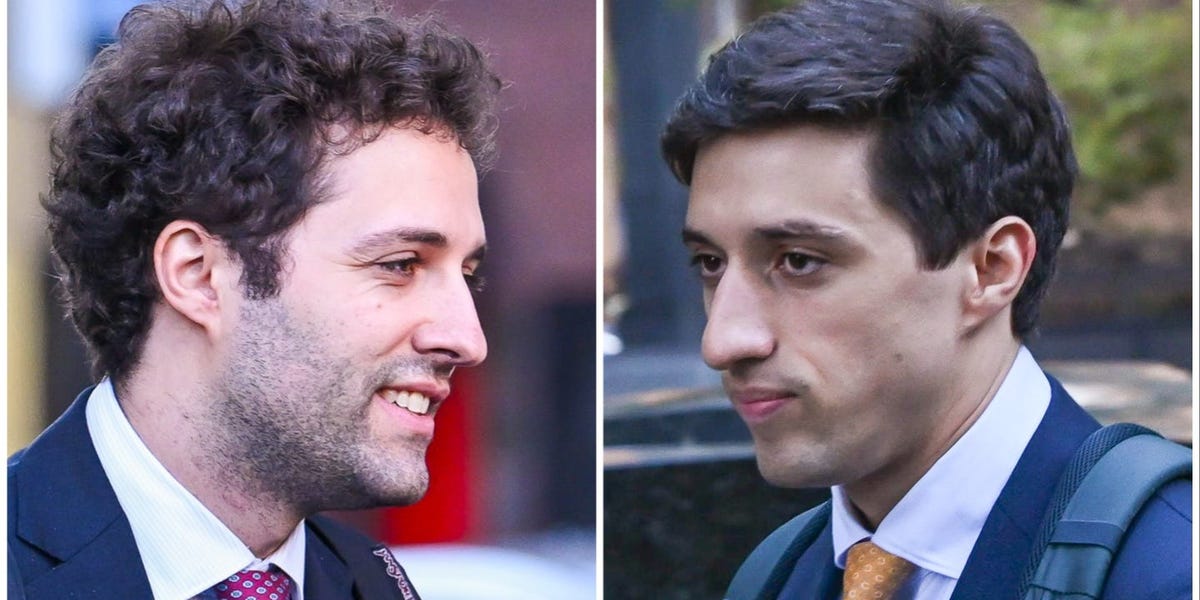
Judge Declares Mistrial in High-Profile Ethereum Fraud Case
A federal judge in Manhattan announced a mistrial on Friday in the case involving two brothers, James and Anton Peraire-Bueno, who were accused of committing fraud through a 12-second transaction on the Ethereum blockchain that allegedly netted them $25 million. The trial concluded at 7 p.m. after the jury, consisting of five men and seven women, expressed significant emotional strain in a lengthy note, stating they were unable to reach a unanimous decision despite their efforts.
The note revealed that several jurors had been emotionally affected, with half of them reportedly breaking down in tears during deliberations, while others struggled with sleepless nights throughout the three-day process. The jury concluded in their note, “We are unanimously of the belief that we are not making any progress.” US District Court Judge Jessica G. L. Clarke acknowledged the situation, stating that there was no indication that further deliberation would yield a different outcome. She subsequently dismissed the jury, marking the end of a four-week trial.
Federal Prosecution Faces Setbacks
This mistrial represents a significant setback for federal prosecutors, who have faced three failed attempts this year to convict defendants in high-stakes digital asset fraud and money laundering cases. While prosecutors have not disclosed their plans regarding a potential retrial for the Peraire-Bueno brothers, the temporary reprieve brought smiles and embraces among the brothers, their legal team, and family members in the courtroom.
The jury’s final note marked the second instance on Friday where they communicated their inability to reach a verdict. One juror, speaking to Business Insider, emphasized the effort made by the jury but refrained from providing further comments before leaving the courthouse. Another juror shared with a prosecutor that the primary challenge lay in interpreting the law, rather than debating the facts of the case.
Charges Against the Brothers
James, 29, and Anton Peraire-Bueno, 25, were charged with wire fraud, conspiracy to commit wire fraud, and money laundering, each carrying a potential maximum sentence of 20 years in prison. For a guilty verdict on the wire fraud charge, jurors had to agree that the brothers intentionally made at least one false representation to deceive others to gain money. Throughout the jury’s deliberation, they repeatedly sought clarifications on critical terms such as “willful,” “misrepresentation,” and “false pretense.”
The prosecution alleged that the brothers deceived three cryptocurrency traders out of $25 million through a fast and intricate transaction. Describing the brothers’ actions as a “first of its kind” blockchain heist, federal prosecutors underscored that such high-tech fraud was akin to more traditional forms of deception. Assistant US Attorney Danielle Marie Kudla reminded jurors, “There is no separate law about fraud on the blockchain,” clarifying that deceitful practices, regardless of the medium, are unacceptable.
The prosecution indicated that the brothers’ fraudulent actions included typing a series of invalid zeros, which effectively voided a block of transactions, allowing them to manipulate their victims’ trades.
Defense’s Argument
The defense countered that the brothers’ actions were part of a competitive landscape, asserting that they rightfully benefited from their strategic programming. Defense attorney Daniel Nathan Marx argued that any perceived rule-bending was simply a part of the highly competitive environment of Ethereum. He posited that the brothers should be celebrated for their success rather than vilified by the prosecution.
This case could have significant implications for the Justice Department’s approach to regulating cryptocurrency. Both the prosecution and defense acknowledged that the Peraire-Bueno case was unprecedented. The defense further argued that the outcome could disrupt the self-regulating nature of the blockchain, which traditionally relies on economic incentives and consensus to govern behavior. They described the indictment as an audacious attempt by the government to impose regulations on a decentralized system through criminal prosecution.
This mistrial follows two other notable defeats for the DOJ this year in Manhattan. In May, a judge overturned a jury’s conviction in a different wire fraud case, and in August, a jury was unable to reach a consensus in a case involving Tornado Cash’s CEO accused of laundering $1 billion. However, a recent pre-trial success for federal prosecutors was marked by the largest forfeiture in department history, seizing $15 billion in bitcoin linked to an international cryptocurrency investment fraud ring.


